
From the Trente Glorieuses to the DPE: A Short History of Renovation in France
From the Trente Glorieuses to the DPE: how renovation in France moved from comfort at any cost to mandatory energy performance, and what comes next.
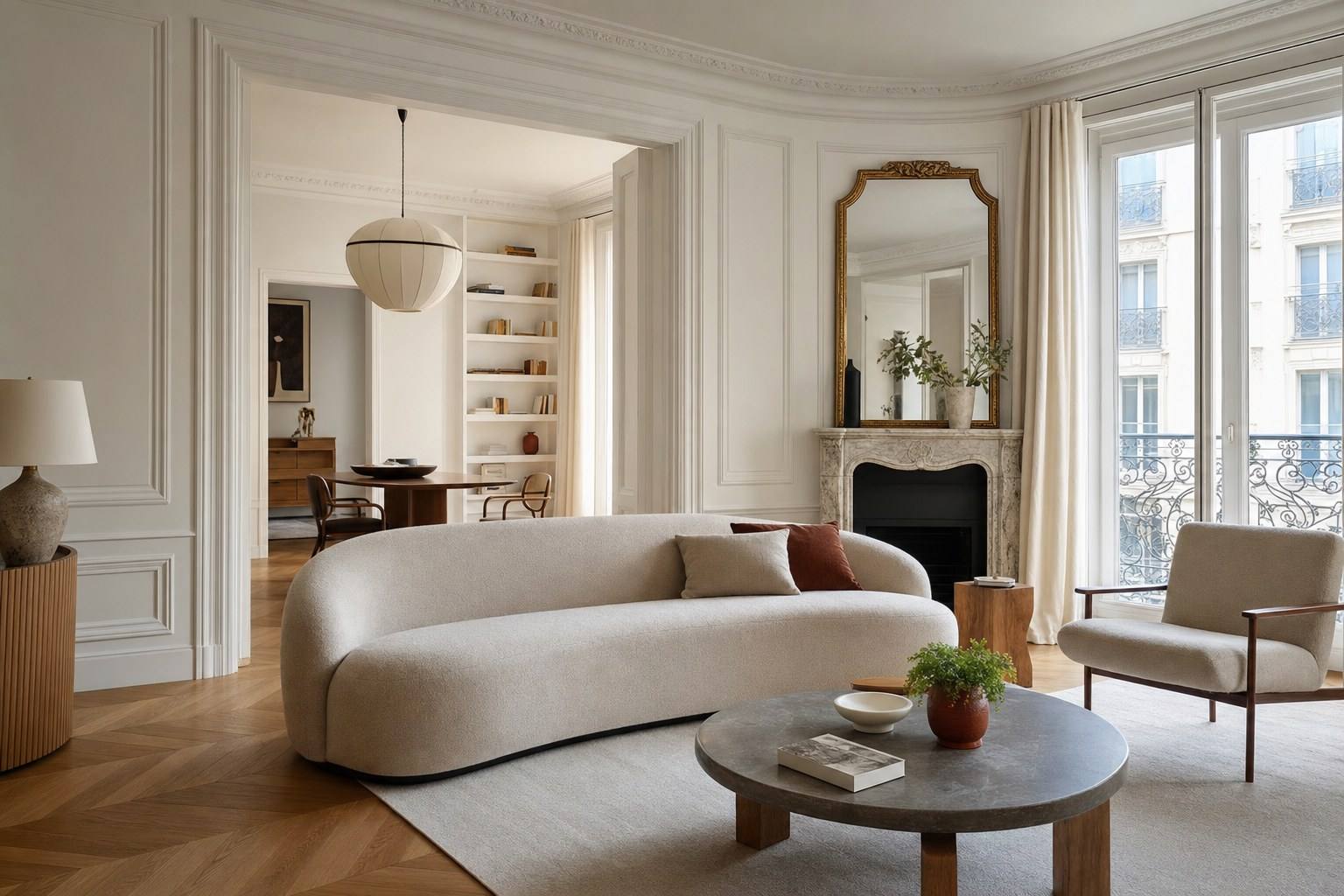
A tiled bathroom, central heating, hot water on tap, a fitted kitchen: what we now take for granted was, for a long time, a luxury. In the 1960s, renovating a home meant, first and foremost, bringing comfort into it. “All mod cons” was spoken of as a promise of modernity, with little thought for the energy bill, fuel oil was plentiful, electricity inexpensive, and the future seemed destined to remain comfortably warm at little cost.
Half a century later, that logic has been reversed. We no longer renovate only to live better, but to consume less. The Diagnostic de performance énergétique, the now-familiar DPE, or energy performance assessment, has become the arbiter of older housing, to the point of progressively banning the rental of the most energy-hungry homes. Understanding how we moved from comfort at any cost to compulsory performance helps us grasp more clearly what a renovation must achieve today, and what it will have to face tomorrow.
Post-war reconstruction and modernisation
In the aftermath of the Second World War, France was desperately short of housing. Entire towns and cities had to be rebuilt, and the existing housing stock, often old, was dilapidated. The Trente Glorieuses, the long period of continuous expansion from the late 1940s to the first oil crisis, were, above all, an immense construction effort.
Two movements came together:
- Building quickly and at scale, to absorb rural exodus and the baby boom. This was the age of the grands ensembles, standardised new housing and the industrialisation of the building site.
- Modernising the old, particularly in city centres inherited from the XIXᵉ century. Parisian buildings, whether haussmanniens or more modest, were gradually equipped over the decades with everything modern comfort required.
In this momentum, renovation was not yet a discipline in its own right: it accompanied the country’s broader modernisation. The aim was not to restore, but to improve. The objective was not to preserve heritage, but to catch up.
The arrival of comfort: heating, bathrooms, kitchens
This is where the great domestic transformation of the century took place. In the interwar period, a significant share of French homes had no bathroom, no indoor WC and no central heating. Washing, heating and cooking still required a demanding domestic organisation.
The post-war decades changed everything. Gradually, homes acquired the fittings and amenities we now consider essential:
- a bathroom with hot and cold running water;
- indoor sanitary facilities, moving in from the landing or the courtyard;
- central heating, first coal-fired, then fuel oil and gas;
- a fitted kitchen, conceived as a functional room.
In those years, renovating meant bringing this comfort into old walls. Openings were made, connections installed, tiles laid. Haussmann apartments, designed in the XIXᵉ century around fireplaces and domestic service, were reconfigured to accommodate this new art of living. The gesture was generous, but often made with little regard for the energy being consumed. Insulation remained a marginal concern: generous volumes and single-glazed windows were heated without counting the cost.
Oil shocks and the first standards
The turning point came in the 1970s. The oil shocks were a brutal reminder that energy had a cost, and that it could run short. Fuel oil, so convenient only yesterday, became a significant item of expenditure. For the first time, the energy question entered into the way buildings were designed and renovated.
The State responded with regulation. The first thermal regulations governed new construction, gradually imposing insulation requirements where none had existed before. People began to speak of heat loss, thermal bridges and double glazing. A culture of energy saving emerged, driven first by household budgets, then by a broader awareness.
For existing buildings, change was slower. A building already standing cannot be brought up to standard by decree alone. But the idea began to take hold: a home is valued not only for its comfort or location, but also for what it consumes. This intuition, discreet in the 1970s and 1980s, would become a major constraint in the following century.
From the DPE to the ban on renting passoires thermiques
The decisive shift is recent. In the early 2000s, France introduced a tool designed to make the invisible visible: the Diagnostic de performance énergétique. The DPE assigns every home a rating, from A for the most efficient to G for the most energy-intensive. Initially informative, almost educational, it has gradually become a genuine regulatory lever.
From a simple diagnosis to a real constraint
What was once merely an indication has become decisive. The DPE now shapes concrete decisions: sale price, the perceived value of a property and, above all, the right to let it. The worst-rated homes, commonly referred to as passoires thermiques, or “thermal sieves”, are being progressively pushed out of the rental market, according to a timetable that tightens the noose year after year around the lowest ratings.
What this changes for older housing
For the owner of an older property, particularly in Paris, the stakes are considerable. A beautiful apartment full of character may receive a poor rating because of its windows, its heating system or original insulation. Energy renovation is no longer an optional enhancement; it has become a heritage and financial necessity:
- preserving the value of the property in a market increasingly attentive to the rating;
- retaining the right to let, by moving out of the classes threatened with exclusion;
- reducing service charges and running costs, in a context of persistently high energy prices.
The paradox is striking: after spending half a century bringing comfort into old walls, we are now focused on controlling its consumption. This movement is not a repudiation, but a deepening. Today’s comfort includes restraint.
What history tells us about the renovation of tomorrow
What does this thread, running from the “all mod cons” of the 1960s to today’s energy requirements, teach us? First, that renovation is never neutral: in every era, it expresses a particular idea of living well. Yesterday, it was hot water and central heating. Today, it is controlled consumption without sacrificing charm.
Second, that constraint can be fertile. Each regulatory turning point, thermal standards, the DPE, the rental timetable, initially seemed burdensome, before improving the overall quality of housing. Energy performance is not the enemy of heritage: handled well, it extends its life.
Finally, the future of renovation will be decided in a demanding balance. The point is no longer to modernise at any price, nor to freeze the old in the name of protecting it, but to reconcile three requirements long treated separately:
- character, the soul of an older home, parquet floors, mouldings, volumes, light;
- comfort, inherited from the Trente Glorieuses and now non-negotiable;
- energy sobriety, the new grammar of sustainable housing.
As an indication for 2026, an ambitious energy renovation in older Parisian property represents a significant investment, highly variable depending on the condition of the home, the nature of the building and the level of finish desired. But recent history shows it clearly: what appears to be an obligation often proves, in the long term, to be an enhancement in value.
This is the lineage in which Lumiera’s work belongs: bringing Parisian heritage into dialogue with the demands of the energy transition, so that performance never comes at the expense of character. To renovate an older home today is to write the next chapter in a long history, that of a comfort which, decade after decade, reinvents itself.
Does your property deserve to enter this new era without losing any of its soul? Let’s discuss how your apartment can combine character, comfort and performance.