
Real Estate Paris France: A Guide for Foreign Buyers
A clear market primer on real estate in Paris, France, for international buyers: prices by arrondissement, what foreigners should know, financing, taxes and how to find the right property.
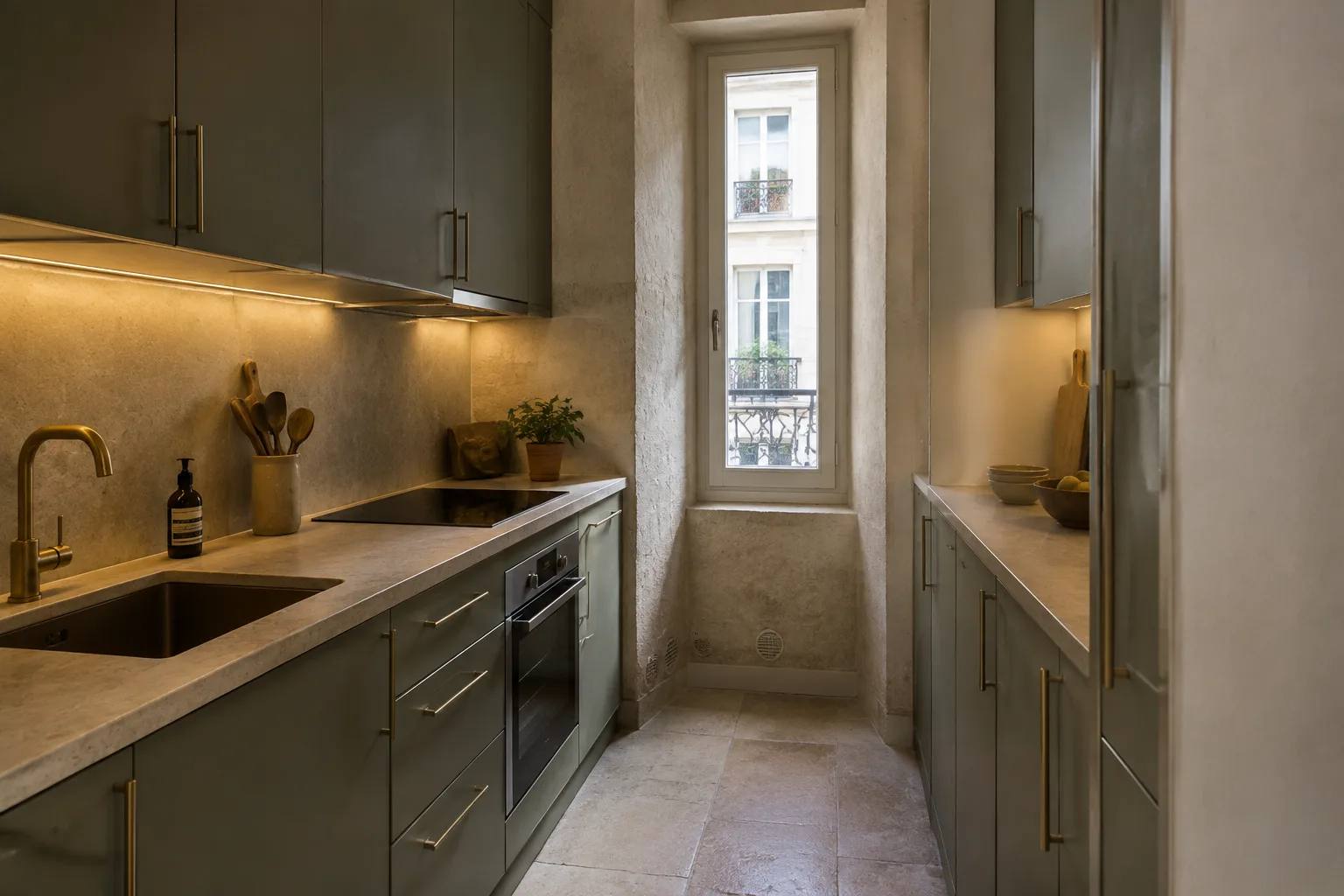
Understanding real estate Paris France from abroad means cutting through the postcard image and reading the market as it actually behaves: a dense, tightly regulated city where supply is genuinely scarce, buildings are old, and location matters more than almost anywhere else in Europe. This guide gives international buyers the market fundamentals: how prices move, what changes when you buy as a non-resident, how financing and taxes work, and how to find a property worth owning.
The Paris real estate market at a glance
Paris is a small city by global standards: roughly 105 square kilometres divided into 20 arrondissements that spiral out from the centre. There is very little new construction inside the city limits, so the market is overwhelmingly one of resale apartments, many of them in Haussmann-era or older buildings. That scarcity is the single most important dynamic to understand. Demand is broad (French buyers, expatriates, international investors) and the physical stock barely grows.
Prices have plateaued and softened somewhat from their 2020 to 2021 peak, partly because higher interest rates cooled local mortgage demand and partly because the energy performance certificate (DPE) now weighs on poorly rated apartments. For a cash-ready foreign buyer, a calmer market can mean more room to negotiate than in years past, especially on properties needing work.
Two structural facts shape almost every purchase. First, most apartments sit in a co-ownership (copropriété), which means shared charges, a syndic that manages the building, and rules about what you can and cannot change. Second, the finest stock rarely reaches public portals: it moves quietly. Our guide to off-market property in Paris explains how that hidden layer works.
Prices by arrondissement
Paris pricing is hyper-local. A quiet street can cost noticeably more than a busy boulevard two minutes away, and a top-floor apartment with light and a lift is a different asset from a dark second floor in the same building. Treat the figures below as indicative €/m² ranges for good-condition apartments, not quotes.
- Central and prestige (1st, 4th, 6th, 7th): broadly €13,000 to €20,000+ per m². The 6th and 7th command the highest prices in the city; prime addresses go well beyond these ranges.
- Established residential (3rd, 5th, 8th, 16th): broadly €11,000 to €16,000 per m², with the Marais (3rd) and parts of the 16th at the top end.
- Sought-after and rising (9th, 10th, 11th, 17th): broadly €10,000 to €13,000 per m². These arrondissements blend character, restaurants and relative value.
- Eastern and outer (12th, 13th, 14th, 15th, 18th, 19th, 20th): broadly €8,000 to €11,000 per m², with strong variation street by street and pockets of rapid change.
Condition changes the maths entirely. An apartment priced low for its arrondissement usually needs work: rewiring, plumbing, a new bathroom, or a DPE upgrade. That is not a warning, it is often the opportunity, provided you budget the renovation realistically. Our guide to Paris apartment renovation cost sets out the ranges to expect.
What foreign buyers should know
The good news first: there is no restriction on foreigners buying property in France. Non-residents, non-EU citizens included, can purchase freely and hold full ownership. There is no citizenship or residency requirement, and buying property does not on its own grant residency.
The transaction is notary-led
Every French property sale goes through a notaire, a public officer who verifies title, handles funds and registers the deed. The notaire is neutral, not your advocate, so many international buyers also retain their own advisor. Expect the process to run through a preliminary contract (the compromis or promesse de vente) with a deposit, a cooling-off period, and a final deed roughly two to three months later. The full sequence is laid out in our complete process guide for buying as a foreigner.
Transaction costs are meaningful
Budget for so-called frais de notaire of around 7 to 8 percent of the price on older properties. These are mostly transfer taxes, not fees, and they are on top of the purchase price. Agency commission, where it applies, is usually built into the advertised price in Paris.
Language and distance
Contracts are in French and binding. If your French is not fluent, work with English-speaking professionals for the legal, agency and renovation sides so nothing is lost in translation. Buying remotely is entirely possible: a power of attorney lets you sign the final deed without flying in.
Buying, financing and taxes
Financing as a non-resident
French banks do lend to non-residents, including non-EU buyers, though terms are more conservative: expect to contribute a larger deposit (often 20 to 30 percent, sometimes more), and to provide detailed proof of income and assets. A French mortgage can be attractive because rates are fixed for the full term and the loan itself can offer estate-planning and hedging benefits. Many buyers use a mortgage broker who specialises in non-resident files.
Ongoing and one-off taxes
The taxes worth knowing as an owner:
- Taxe foncière: an annual property-owner tax, paid whether or not you live there.
- Impôt sur la fortune immobilière (IFI): an annual wealth tax on French real estate assets above €1.3 million net.
- Capital gains tax on resale: applies to non-residents, with allowances that reduce the liability the longer you hold the property.
- Rental income tax: if you let the apartment, French tax applies on the income; double-tax treaties usually prevent paying twice.
None of this is prohibitive, but it should be modelled before you buy, ideally with a French tax advisor familiar with your home country's treaty.
Renovation as part of the investment case
In Paris, buying and renovating is often the surest route to both a home you love and value creation. A tired apartment in a good building, bought below its refreshed potential and brought up to standard, can outperform a move-in-ready flat you overpaid for. A DPE upgrade also protects future value and rentability. If you want the property found, negotiated and renovated as one coordinated project, our Mandate to Buy service handles the full chain for international clients.
How to actually find the right property
The public portals (SeLoger, Bien'ici, PAP) are where you start, but they show a fraction of what trades in the prime segment, and the best listings move in days. A serious international search usually combines three channels:
- Portals for market feel and pricing benchmarks.
- A buying agent (chasseur immobilier) who represents you, filters, previews and negotiates on your behalf. Our article on what a buying agent in Paris does explains the role and typical fees.
- Off-market networks, reached through professionals who see properties before they are advertised.
Whichever route you take, define your criteria tightly before you look: arrondissement, floor and lift, light and orientation, condition, and whether you will renovate. A vague brief in a scarce market wastes months.
The buyers who do best in Paris are the ones who decided, before viewing anything, exactly what they were willing to fix and what they were not.
When you are ready to move from research to action, you can browse our completed projects to see what a full renovation delivers, or get a renovation estimate in under a minute to price the work into your offer. The Paris market rewards preparation: understand the fundamentals, assemble the right advisors, and buy on condition and location rather than gloss.