
Renovation Company Paris English Speaking: How to Choose the Right Partner
A practical decision guide for international owners choosing an English-speaking renovation company in Paris, covering language, insurance, contracts and the red flags to avoid.
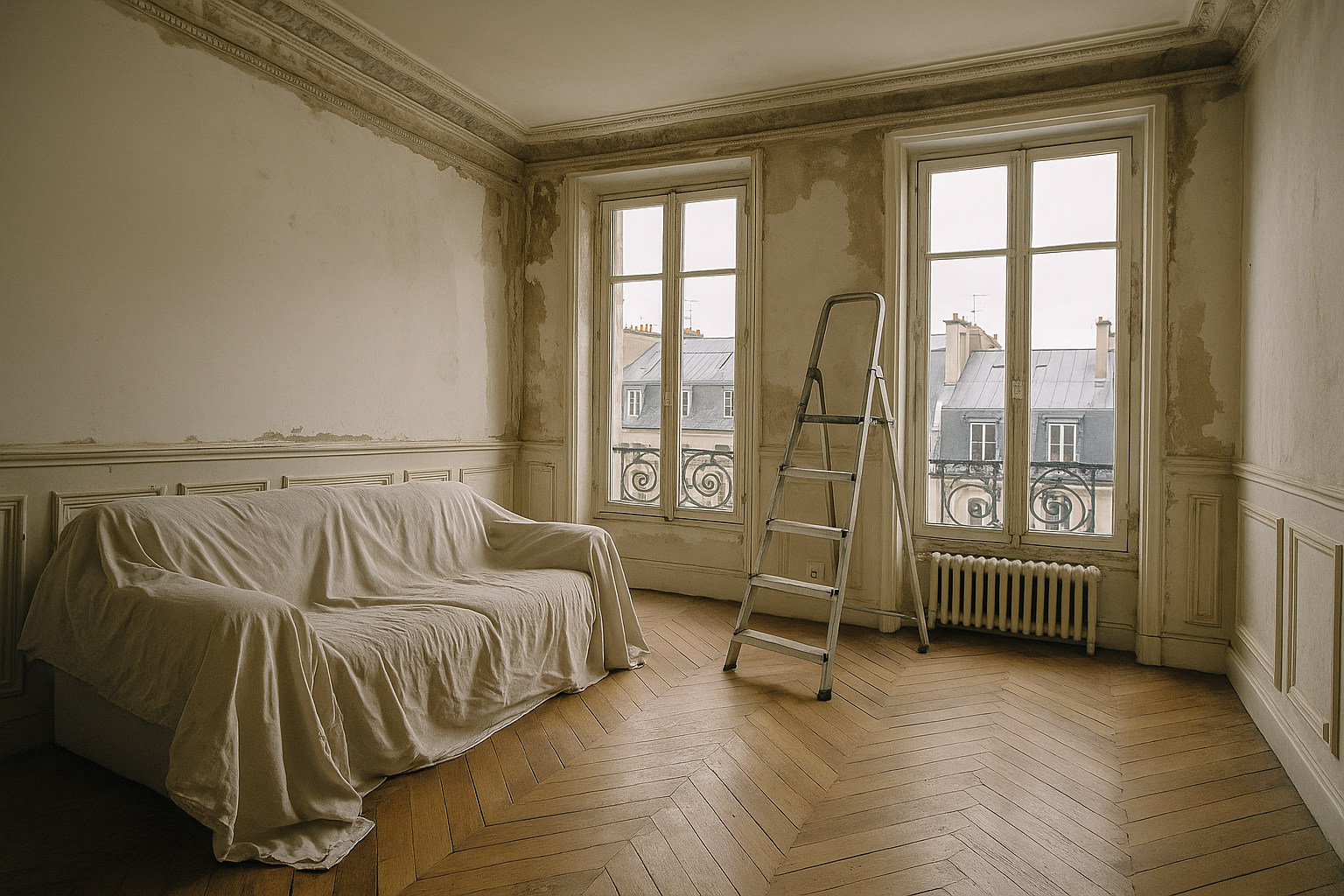
Choosing a renovation company in Paris that is genuinely English speaking is one of the most consequential decisions an international owner will make. A Paris renovation involves French building codes, co-ownership rules, mandatory insurances and a chain of trades, and if you cannot follow the conversation clearly, every misunderstanding becomes a delay or a cost. This guide walks you through what to verify, how the French guarantee system protects you, and how to tell a reliable partner from a risky one.
Why language matters in a Paris renovation
A renovation is a months-long dialogue: site visits, material choices, technical trade-offs, schedule changes, invoices and legal documents. When that dialogue happens in a language you only half understand, small ambiguities compound. You might approve a finish you did not fully picture, miss a clause in the devis (quote), or fail to grasp why the syndic is blocking a wall opening.
An English-speaking company does more than translate. A good one restructures the whole experience for a client who is not physically in France, often in a different time zone, and unfamiliar with French norms. That means clear written summaries after each decision, contracts you can actually read, and a single point of contact who explains the why behind French constraints, not just the what.
What "English speaking" should really mean
- Contracts, quotes and change orders available in English, or with a reliable English explanation.
- A dedicated project manager who communicates in fluent English, not a receptionist who forwards messages.
- Written recaps of verbal decisions, so nothing important lives only in a phone call.
- Remote-friendly reporting: photos, progress updates and video walkthroughs for owners abroad.
Selection criteria
Beyond language, apply the same rigour you would to any significant investment. The strongest candidates make the following easy to verify.
Track record on comparable projects
Ask to see completed Parisian apartments similar to yours: a Haussmannian flat, a studio, a loft. Period buildings carry specific risks around parquet, mouldings, plumbing and load-bearing walls. Browsing a company's portfolio of completed Paris projects tells you whether they handle heritage detail with care or default to generic finishes.
A clear, itemised quote
A serious quote breaks down each trade, the materials specified, quantities and unit prices, not a single lump sum. This lets you compare bids meaningfully and understand where your money goes. For orientation on realistic budgets, high-end turnkey renovations in Paris typically fall within broad indicative ranges of roughly €1,500 to €3,500+/m² depending on scope, heritage constraints and finish level; treat any figure well below that with caution.
A written schedule with milestones
The contract should include a start date, key milestones (demolition, rough works, second fix, finishes) and a handover date, with terms for delays. Understanding a realistic timeline matters: our guide on how long a full renovation takes gives room-by-room expectations you can hold your contractor to.
Financial stability and payment terms
Payments should be staged against completed milestones, never front-loaded. Be wary of any company asking for a large deposit before work begins. Check that the business is properly registered (a SIRET number) and has been trading for several years.
Insurance and guarantees explained for foreigners
This is the area where international owners are most exposed, because the French system has no exact equivalent abroad. Three protections matter, and a legitimate company will provide certificates without hesitation.
Garantie décennale (ten-year guarantee)
The garantie décennale is a mandatory ten-year insurance covering structural defects and any damage that renders the property unusable: think a failing waterproofing membrane or a compromised load-bearing element. Every builder legally working in France must hold it. Always request the current attestation d'assurance décennale and confirm it names the specific trades in your project. Crucially, this cover follows the property, so it protects future buyers too, a real asset if you later sell.
Garantie de parfait achèvement (one-year)
This obliges the contractor to fix any defect reported within the first year after handover, whatever its size. Note the reception date in your contract, as the clock starts there.
Assurance dommages-ouvrage
Legally the owner's responsibility, this insurance pre-finances décennale repairs quickly without waiting for a court to assign blame. For a full apartment renovation it is strongly advisable, and an English-speaking company should explain whether your project requires it and help you arrange it.
If a company hesitates to hand over its insurance certificates, or claims its craftspeople "are covered" without documents, walk away. In France, no paperwork means no protection.
Turnkey vs managing trades yourself
As an owner who may not live in France, your biggest practical question is how much you want to coordinate. There are two broad models.
The turnkey (clé en main) model
A single company designs, plans and delivers the whole project, coordinating every trade under one contract and one point of contact. For international owners this is usually the safest route: one accountable party, one schedule, one invoice stream, and no need to referee disputes between separate craftspeople from abroad. Our article on what to expect from a turnkey home renovation in Paris describes the process end to end.
Coordinating separate trades
You can also hire an electrician, plumber, tiler and painter individually. This can lower headline costs but transfers coordination, sequencing and liability management onto you, difficult when you are not on site. The trade-offs are laid out in our comparison of all-trades renovation (TCE) versus separate craftspeople.
An "all-trades" renovation company in Paris that speaks English combines the two advantages you most need: full coordination and clear communication. If your goal is to renovate and keep the apartment as a home or long-term asset, our Renovate to Stay service is built around exactly this turnkey, single-contact approach.
Red flags
Even a company that markets itself as English speaking can fall short. Watch for these warning signs before you sign.
- No written insurance certificates. The single most important document to see is the décennale attestation.
- Vague or lump-sum quotes. If you cannot see what each trade and material costs, you cannot control the project.
- Pressure to pay large sums upfront. Staged payments tied to progress are the norm.
- No named project manager. If communication routes through whoever answers the phone, decisions get lost.
- Prices far below market. Unusually cheap bids often exclude the décennale, use undeclared labour, or hide inevitable extras.
- No local references or portfolio. Real Paris experience shows in completed work, not promises.
- Reluctance around the syndic and permits. A competent partner manages co-ownership approvals and any prior declaration confidently.
Renovating in a Paris building brings its own procedural layer; understanding approvals, the syndic and common areas helps you judge whether a company truly knows the local terrain.
Making the decision with confidence
The best way to compare companies is to give each the same brief and read the quality of their response: how quickly and clearly they reply in English, how detailed the quote is, whether they volunteer insurance documents, and how well they explain French constraints you did not know about. That first exchange is a preview of the whole project.
When you are ready to move from research to numbers, you can get a renovation estimate in under a minute and start a conversation with a team that works with international owners every day. Choosing well at this stage is what turns a stressful cross-border project into a smooth, well-documented one.