
Interior Design Paris: The Parisian Apartment Style Explained
What defines the Parisian apartment style, from mouldings and parquet to light and colour, and how to achieve it in a renovation with an English-speaking designer.
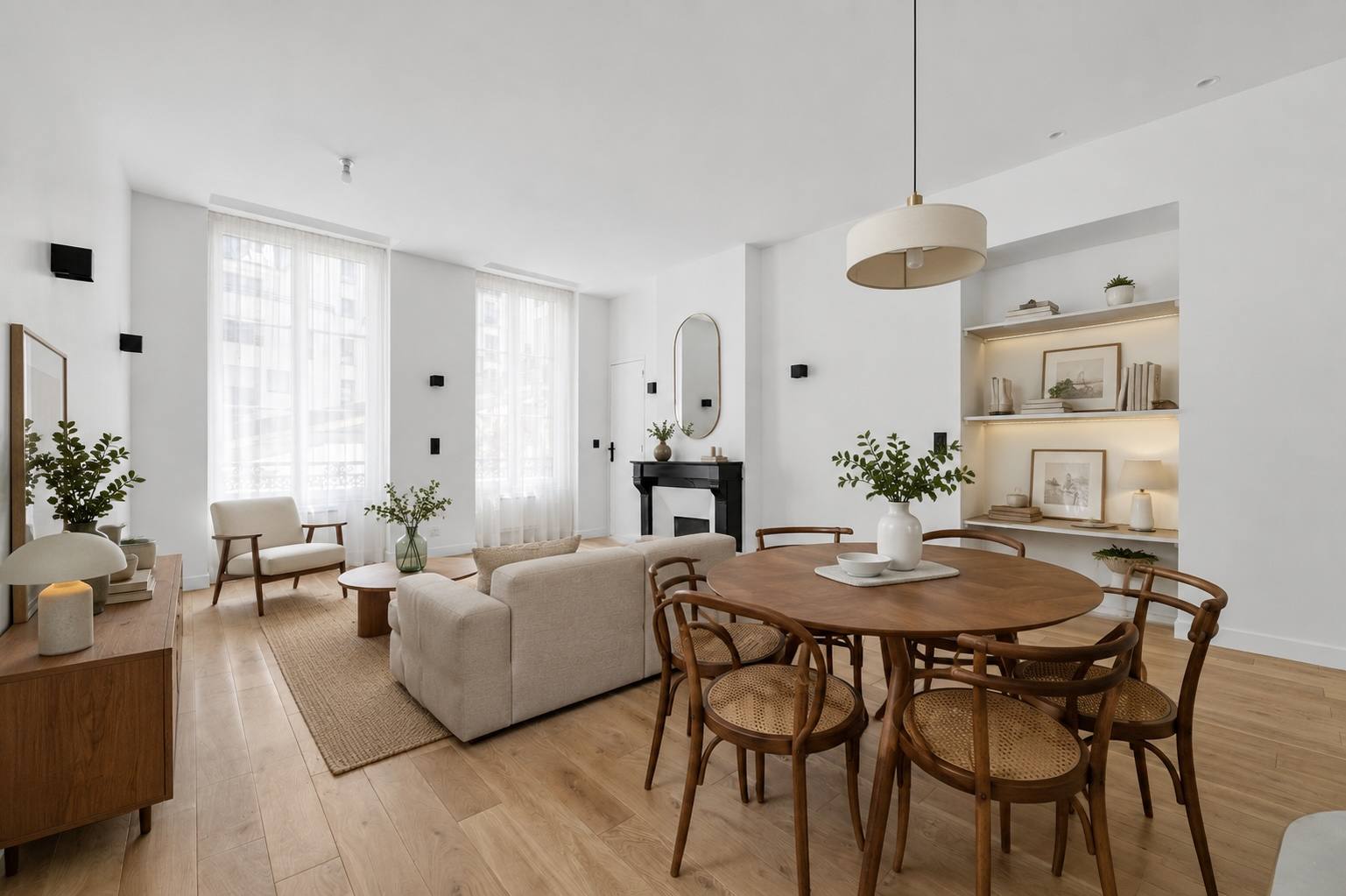
Few interiors are as instantly recognisable, or as quietly aspirational, as the Parisian apartment. When international buyers search for interior design Paris, they are rarely asking about a single trend. They are asking about a whole grammar of proportion, light and material that has evolved over two centuries and still feels effortlessly current. This guide sets out what actually defines Parisian interior design as a style, the codes that make it work, and how to reproduce it faithfully during a renovation, without turning your apartment into a pastiche.
What is Parisian interior design?
Parisian interior design is less a look than a set of principles. At its heart is the tension between heritage architecture and restrained, contemporary living. A classic Haussmannian flat gives you tall ceilings, generous windows, herringbone parquet and plaster ornament. Parisian style respects those bones and then edits everything else back to essentials.
The result reads as understated rather than decorated. Colours are muted, furniture is a considered mix of periods, and nothing shouts. This is the opposite of a fully themed interior. A Parisian room might pair an eighteenth-century marble fireplace with a mid-century leather chair, a modern linen sofa and a single striking contemporary artwork. The confidence lies in the mix, and in knowing what to leave out.
To understand where these codes come from, it helps to know the architecture behind them. Our overview of the history of the Haussmannian apartment explains why these proportions still captivate, and why they remain the canvas for the style.
The signature elements
Certain features do the heavy lifting. Preserve and restore these well, and even a modest apartment will feel authentically Parisian. Neglect them, and no amount of furniture will compensate.
Mouldings, parquet and fireplaces
This is the heritage trio that anchors the whole style. Mouldings, meaning cornices, ceiling roses and panelled walls, frame a room and draw the eye upward, exaggerating the sense of height. Parquet, whether laid à la française, in point de Hongrie or bâtons rompus, warms the floor and gives the interior its characteristic rhythm. The marble fireplace gives every principal room a natural focal point, even where it no longer functions.
Restoring these properly is skilled work. Plaster ornament needs a craftsperson who can match profiles. Old parquet usually wants patching and refinishing rather than replacing. Fireplaces may need cleaning, repair or careful reinstatement. We cover the practicalities in our guide to restoring the heritage trio and finding the right craftspeople. The temptation to rip everything out for a blank box is one of the most common and costly errors, as our note on renovating without stripping away character explains.
Light and colour palette
Parisian interiors are built around light. North-facing rooms take on a cool, even quality; south-facing ones flood with warmth. The style works with that light rather than fighting it. Walls are usually kept pale, in soft whites, greige or chalky off-whites, so that the plaster relief and the parquet do the talking. Colour, when it appears, tends to arrive in deep, considered accents: a dark blue library, a muted green kitchen, brass and warm metals.
Because ceiling height and orientation change how every shade reads, colour choices in a Parisian flat are technical as much as aesthetic. Our detailed piece on choosing colours for a Paris apartment walks through how light, ceiling height and orientation should guide the palette. Lighting itself deserves equal care. The aim is layered, warm, largely indirect light that flatters the space after dark. See our guide to lighting an old apartment for how to work with tall ceilings and precious natural light.
Materials that age well
The Parisian palette favours honest, natural materials that patinate rather than wear out: oak, stone, lime plaster, terracotta, marble and brass. These read as timeless precisely because they are, and they connect the interior to the age of the building. Our overview of noble, durable materials explains why they are returning to favour and how to specify them.
Modern vs classic Parisian style
There is no single Parisian style; there is a spectrum. At one end sits the classic interpretation: fully restored ornament, traditional parquet, period fireplaces, antique or gilded touches, a palette of soft neutrals. At the other end is the modern Haussmannian approach, which keeps the heritage shell but introduces clean-lined joinery, a discreet open kitchen, contemporary bathrooms and a more graphic use of colour and lighting.
Most successful renovations land somewhere in between. The building''s original features stay; the way you live is thoroughly current. This balance is exactly what we explore in our decoding of the modern Haussmannian style. Choosing where to sit on this spectrum is the single most important design decision, because it drives everything from layout to budget.
A few practical distinctions matter for international buyers:
- Kitchens. Classic Parisian apartments hid the kitchen; modern ones often open it to the living space, subject to load-bearing constraints and co-ownership rules.
- Bathrooms. Period flats rarely had enough of them. Adding well-designed, heritage-sympathetic bathrooms is often the biggest comfort upgrade.
- Comfort systems. Insulation, heating and soundproofing are invisible but transform daily life, and increasingly affect resale value through the energy performance rating.
Working with an English-speaking designer in Paris
For buyers who live abroad, the challenge is rarely taste. It is the process. A Paris renovation involves co-ownership approvals, French building regulations, local craftspeople and a design vocabulary that does not always translate cleanly. Working with an English-speaking interior designer and architecture studio in Paris removes that friction, letting you make confident decisions remotely and understand exactly where your budget goes.
As an indication, high-end turnkey renovations in Paris typically run in the region of €2,000 to €4,000 per m², and more for heavy structural work, bespoke joinery or full heritage restoration. Treat any figure as a starting point until a proper site visit and scope exist. For a fast, no-obligation starting point, you can get a renovation estimate in under a minute.
The right studio does more than decorate. It preserves what gives your apartment value, modernises what daily life demands, coordinates every trade and manages the administrative path from first visit to handover. That is the philosophy behind our Renovate to Stay approach, designed for owners who want to live in a home that keeps its soul while gaining modern comfort. If you would rather see the results than read about them, browse our completed projects.
Parisian style is not something you buy off the shelf. It is the product of restraint, respect for the building, and a handful of decisions made in the right order.
Achieved well, the Parisian apartment style is remarkably durable. It does not date because it was never chasing a trend in the first place. It is a conversation between a nineteenth-century interior and the way you want to live today. Start with the bones, honour the light, choose materials that age gracefully, and let the mix of periods do the rest.