
Home Staging a Paris Apartment Before You Sell
How to decide between home staging and renovation before selling a Paris flat, what actually moves the price, and realistic costs and timelines.
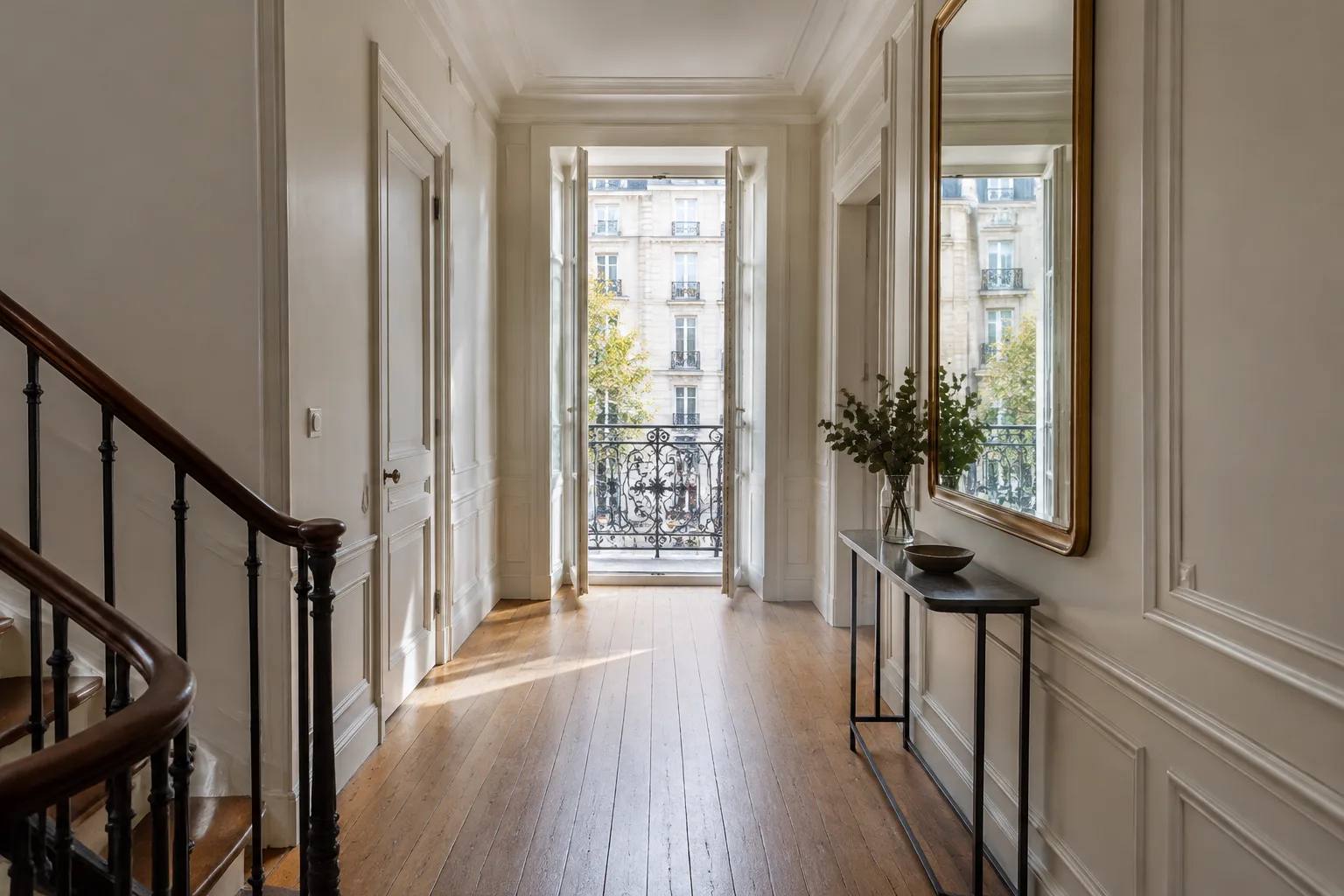
If you are preparing to sell, home staging a Paris apartment is often the fastest way to lift the perceived value of your flat without committing to a full renovation. Staging is cosmetic and light: it rearranges, declutters, repaints and dresses a space so buyers walk in and imagine living there. The question most sellers ask is simple: is staging enough, or does this apartment need real work before it goes on the market? This guide answers that specifically for Paris, where buyer expectations, period details and co-ownership realities all shape what pays off.
Home staging vs renovation before selling
The two are easy to confuse because both aim at the same result: a higher sale price, a faster sale, or ideally both. The difference is depth, cost and time.
Home staging is surface work. Think neutral paint, decluttering, light furniture rental, better lighting, a thorough clean and small repairs. Nothing structural moves. You are editing what is already there so the apartment photographs well and shows well.
Renovation before selling changes the apartment itself: a reconfigured kitchen, a rebuilt bathroom, new electrics, restored parquet, a wall opened up. It costs far more, takes weeks to months, and is justified only when the current state actively repels buyers or when the price ceiling in your building is clearly higher than your flat can reach as-is.
We have written two companion pieces on the heavier decision. If you suspect your flat needs more than cosmetics, read whether you should renovate before selling a home and how to sell a renovated apartment for more value. This article stays deliberately on the lighter end of the spectrum.
What actually moves the price in Paris
Parisian buyers, local and international, arrive with a specific mental picture. They want light, period character where it exists, and a flat that feels move-in ready. Staging works because it speaks directly to those expectations.
Light and the first thirty seconds
Natural light is the single most prized asset in Paris, and the first impression forms almost instantly. Clean windows, washed curtains or none at all, mirrors placed to bounce light, and warm bulbs at the right height transform a dim flat. If your ceilings are high, play to them. Our note on lighting an old apartment covers how to work with Haussmannian proportions.
Period details, made visible
If you have mouldings, a marble fireplace, a parquet floor or a ceiling rose, uncover them. Buyers pay a premium for authentic character. Staging here means removing anything that competes: heavy furniture against a cornice, rugs hiding point de Hongrie parquet, dark paint flattening the plasterwork.
Neutral, not bland
The goal is for a buyer to project their own life onto the space, so personal clutter, strong colours and family photographs come down. Neutral does not mean lifeless: a considered palette, a few quality objects and fresh flowers read as effortless. For the palette itself, our guide to choosing colours for a Paris apartment is a good starting point.
The rooms that convert
Kitchens and bathrooms sell flats. You rarely need to rebuild them to stage well: regrouting, replacing tired taps and handles, a coat of paint on cabinet fronts and decent lighting can reset a room's age by a decade in a buyer's eyes.
Cost and timeline of staging
Staging is attractive precisely because it is cheap and quick relative to the sale price it protects. Figures below are indicative and vary with the apartment's size, condition and address.
- Light staging (declutter, deep clean, restyle existing furniture, minor repairs): often a few thousand euros, deliverable in one to two weeks.
- Standard staging (above, plus fresh neutral paint and rented furniture for an empty flat): commonly in the range of €3,000 to €12,000 for a typical two or three room Paris apartment, including a few weeks of furniture rental.
- Cosmetic refresh bordering on light works (repainting throughout, refinishing parquet, new fixtures): this edges toward €150 to €400 per m², at which point you should ask whether a targeted renovation makes more sense.
As a rule of thumb, staging is worth it when its cost is a small fraction of the price difference it can unlock, and when the apartment is fundamentally sound. A well-staged flat also photographs better, which matters enormously because most buyers filter online before they ever book a visit.
DIY vs professional staging
Plenty of sellers stage their own flat, and for a tidy, already-charming apartment that is a reasonable choice. The honest test is whether you can look at your own home the way a stranger would.
When DIY works
- The apartment is in good cosmetic condition.
- You can genuinely declutter and depersonalise without sentiment.
- You have an eye for light, scale and a neutral palette.
When a professional earns their fee
- The flat is empty and needs furniture to give scale and warmth.
- It is dated, awkwardly laid out, or dark, and needs a trained eye to redirect attention.
- You are selling at the upper end, where buyers expect a flawless presentation and the stakes justify the investment.
A professional stager brings a furniture inventory, a stylist's eye and distance from your attachment to the place. For an empty high-value apartment, that distance is often what separates a quick sale from months on the market.
When staging isn't enough
Staging hides nothing structural, and sophisticated Paris buyers see through lipstick on a poor floor plan. There are clear signals that you have crossed from staging into renovation territory.
- A poor DPE. Energy performance now shapes both price and legal status for rentals. A dim F or G rating is not a staging problem. See improving the DPE of a period apartment.
- A dysfunctional layout. A kitchen that cannot fit a table, a bathroom off the living room, a dark central corridor: these depress offers and no amount of furniture fixes them.
- Tired bathrooms and kitchens beyond cosmetic repair. Cracked tiling, failing plumbing and dated units read as hidden cost to a buyer, who will discount more than the repair would cost you.
- A gap to the building's ceiling price. If comparable renovated flats in your building sell well above what your flat can reach staged, the renovation may pay for itself. To size that gap, look at Paris apartment prices per square meter for your arrondissement.
When the numbers point to work rather than styling, a turnkey renovation planned around resale can be the better economic decision. Our renovate to sell service is built precisely for that, and the broader renovate to sell approach walks through how we scope works to the price ceiling rather than over-spending.
The decision framework is short: if the flat is sound and simply presents poorly, stage it. If it loses buyers on layout, condition or energy, renovate what pays and leave the rest. Staging and renovation are not rivals; they are two tools, and the right one depends entirely on the gap between your apartment and what the market in your building expects.